Per capita and per GDP waste generated decreased in past decade
2. The daily domestic waste [2] generated per capita (refer to Fig. 1) decreased from 1.06 kg in 2015 to 0.83 kg in 2025, with a slight improvement in 2025 compared to 0.85 kg in 2024.

Fig. 1. Daily domestic waste generated per capita from 2015 to 2025.
3. The daily non-domestic waste generated per billion dollar GDP (refer to Fig. 2) decreased from around 36 tonnes in 2015 to around 24 tonnes in 2025, with a slight increase in 2025 compared to around 23 tonnes in 2024. The increase can be attributed to growth in the construction sector (refer to Chart 2 in Annex).
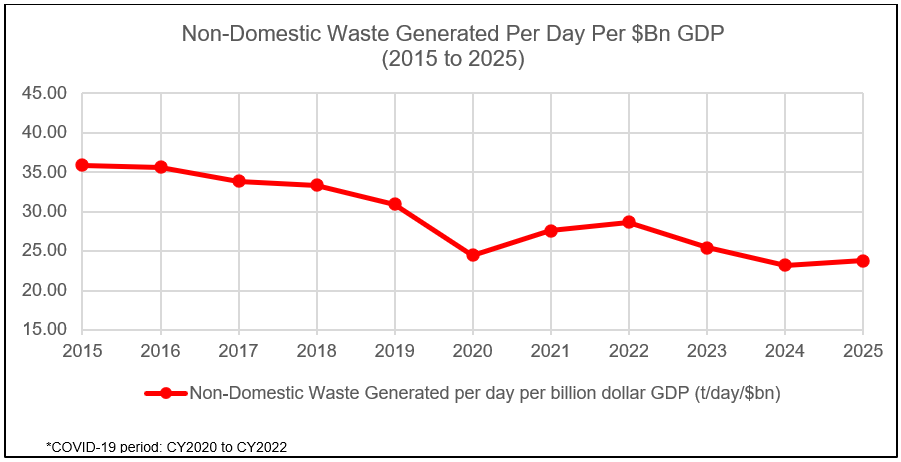
Fig. 2. Daily non-domestic waste generated per billion dollar GDP from 2014 to 2024.
Overall recycling rate remains stable
4. Singapore's overall recycling rate remained stable at 52 per cent in 2025 (refer to Tables 1 and 2 in Annex). The domestic recycling rate remained at 11 per cent while the non-domestic recycling rate increased slightly from 65 per cent to 67 per cent.
5. The recycling of paper/cardboard and plastics declined slightly due to continued challenges such as rising collection and freight costs, as well as volatile global market conditions that have impacted commodity prices (refer to Charts 1 and 3 in Annex). Given Singapore’s small market, most of our recyclables are exported overseas for further processing and recycling, making the viability of these exports susceptible to external factors.
6. Food waste recycling rate remained stable at 18 per cent while the horticultural waste recycling rate declined due to short-term challenges faced by recyclers in the off-take of woodchips and compost (refer to Charts 4 and 5 in Annex). The decrease in the volume of used slag generated and recycled is due to a temporary reduction in recycling activities and a decline in local demand for ship blasting (refer to Chart 6 in Annex).
More households are recycling, and awareness is growing
7. Household recycling participation has been on an uptrend. According to the National Environment Agency’s (NEA) 2025 survey on household recycling, 78 per cent of households recycle, compared to 72 per cent in 2023. In addition, a higher proportion of respondents are aware of common household items that can be deposited into the recycling bins and chutes. For example, 92 per cent of respondents are aware that a rinsed shampoo or detergent bottle can be recycled, compared to 89 per cent in 2023. NEA recognises that individual efforts to conserve our resources are vital, and encourages households to not just recycle more, but also to recycle right.
Upcoming and ongoing efforts to improve recycling of key waste streams
8. There remains room to improve the quality and volume of recyclables across key waste streams. NEA continues to partner the community and businesses to encourage the reduction of waste generated and increase recycling efforts. These efforts will be focused on food, paper/cardboard and plastics as these make up the largest amount of waste not recycled.
9. NEA is working with the Public Waste Collectors (PWCs) to increase the collection of paper/cardboard from households and trade premises. Since December 2025, PWCs have been engaging Town Councils and trade premises to provide dedicated collection avenues for paper/cardboard. These efforts aim to improve household recycling participation and address issues such as overflowing blue recycling bins and contamination of recyclables.
10. NEA has introduced source-segregated collection of key waste streams to complement the network of blue recycling bins. Singapore’s first Extended Producer Responsibility (EPR) scheme, introduced in 2021, ensures the proper end-of-life management and recycling of e-waste.
11. The Beverage Container Return Scheme — “Return Right”, which commenced on 1 April 2026, with a six-month transition period, is Singapore’s second EPR scheme. It will further support clean stream collection of metal and plastic beverage containers for recycling. The scheme will be fully operational from 1 October 2026.
12. Regarding food waste, owners and/or occupiers of new large commercial and industrial buildings, who submitted their building plans from 1 January 2021, have started segregating their food waste for treatment and reporting since March 2024, as required under the Resource Sustainability Act (RSA). These include commercial buildings such as large hotels and malls, as well as industrial developments that house food manufacturers or food caterers. Moving forward, these requirements will be extended to existing commercial and industrial buildings, in tandem with the completion of the food waste treatment facility in Tuas Nexus. To drive further reduction and recycling of food waste, NEA has awarded three proposals promoting food valorisation under the Closing The Resource Loop (CTRL) Funding Initiative. More information is available at go.gov.sg/ctrlfunding.
13. Beyond these immediate moves, we will also be reviewing the 2019 Zero Waste Masterplan, assessing progress made, and reviewing our strategies to encourage reduce, reuse and recycle, so as to extend the lifespan of Semakau Landfill.
[1] Non-domestic waste is waste generated at industrial and commercial premises.
[2] Domestic waste is waste collected from households and trade premises (e.g., shophouses, educational institutions, petrol stations, hawker centres and places of worship).
ANNEX