Public Cleanliness

Overview

Keeping Singapore clean

Singapore is known for being a clean and attractive city. NEA plays a key role in ensuring Singapore lives up to its reputation, by ensuring its streets and pavements are litter-free. This is achieved in three key ways: the cleaning of public areas, public education, and enforcement.

Before April 2012, NEA was responsible for the cleanliness of roads, pavements, and certain private estates and public areas in Singapore. Other agencies, such as PUB and NParks, were responsible for the cleaning of their own areas of responsibility, such as drains and parks.

To improve efficiency and achieve a higher standard of public cleanliness in Singapore, the Department of Public Cleanliness (DPC) was formed on 1 April 2012. It was renamed as Division of Public Cleanliness with effect from 1 September 2020.

More information about the DPC can be found here.

More information on initiatives to raise the standards, productivity, and professionalism of the cleaning industry can be found here.

The NEA works closely with its 3P partners (the people, public, and private sectors) to encourage members of the community to be responsible for keeping their surroundings clean.

NEA’s education efforts emphasise that the public should not rely on cleaners to clean up after them. Rather, they should hold on to litter until they find a bin to dispose of it.

NEA maintains strict enforcement against public health offences, including littering. Litterbugs will be subjected to a composition amount of $300 for a first offence.
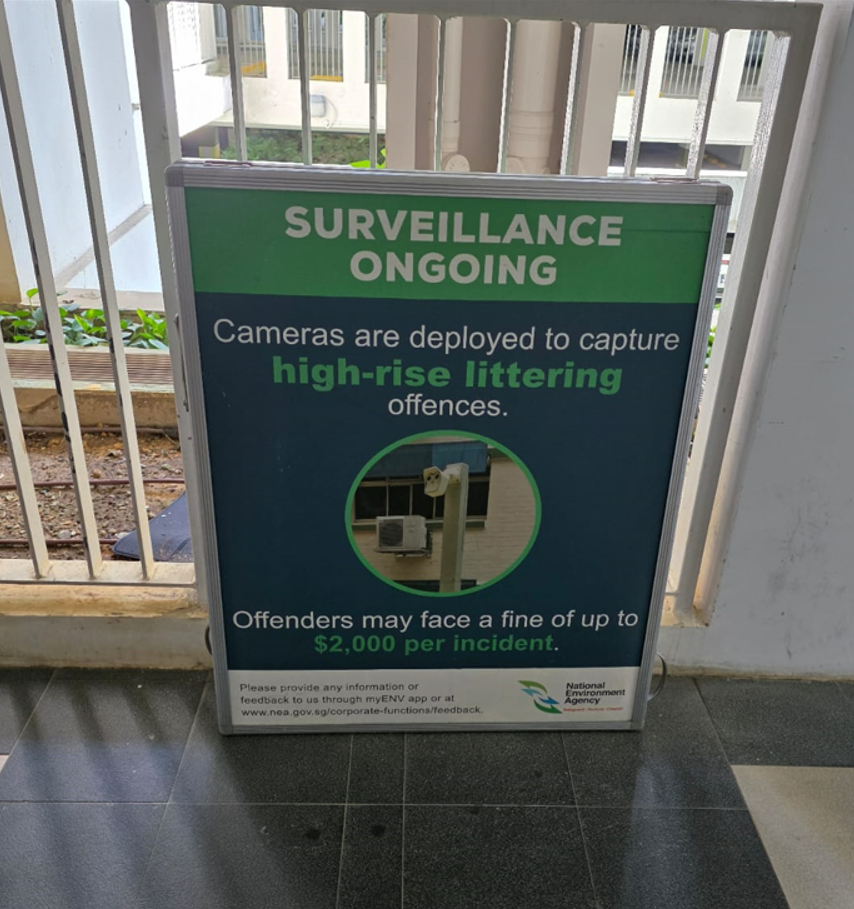
Littering from residential flats is also a serious offence, as it poses a danger to the public, dirties the environment, and threatens our public hygiene. From 1 July 2023, a presumption clause for high-rise littering came into effect under the Environmental Public Health Act (EPHA) 1987. This clause strengthens enforcement by placing greater responsibility on flat owners and tenants to prevent littering from residential flats. When litter is thrown from a residential flat and lands in a public place, the registered owners (or tenants where the whole flat is leased) are presumed to have committed the offence.

Under EPHA, high-rise littering offenders are liable on conviction to a court fine of up to $2,000 for a first conviction, $4,000 for a second conviction and $10,000 for the third and subsequent convictions. The court may also impose a Corrective Work Order (CWO), requiring offenders to clean public areas for up to 12 hours.
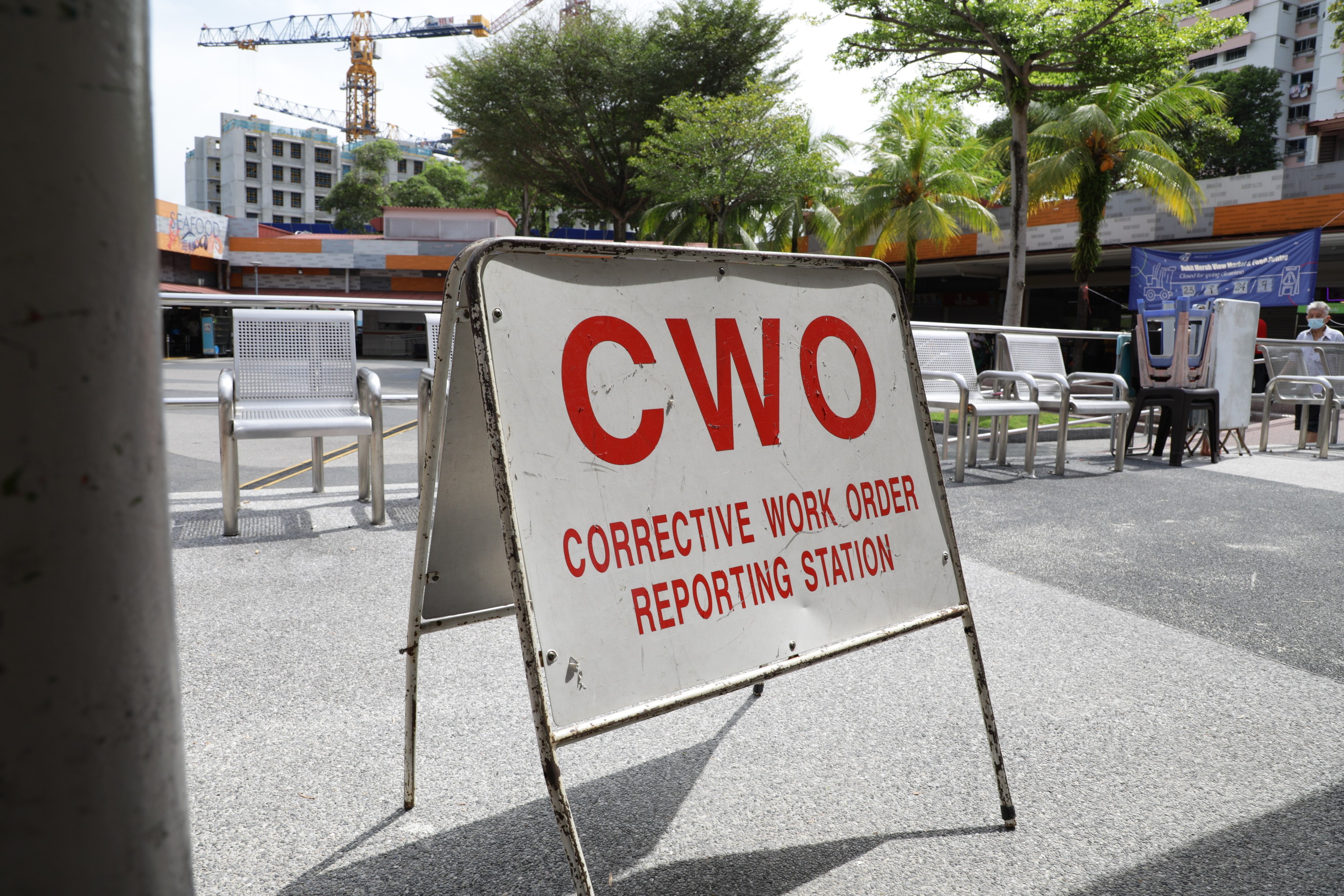
CWO – introduced in 1992 – involves picking or sweeping up litter. This will give offenders the opportunity to reflect on the hardship that cleaners endure while cleaning up after them, and how litter mars our living environment. The visible nature of CWO also serves as a deterrent against littering.


Creating Cleaner Neighbourhoods

Following stepped-up efforts in the Year of Public Hygiene, NEA introduced the Cleaner Neighbourhood initiative in 2025. One key focal area is cleanliness hotspots – identified through localised litter counts, public feedback and sustained ground observations.

At these hotspots, enforcement efforts were enhanced through highly visible patrols, standees, surveillance cameras and ground engagement. The cameras are equipped with video analytics for remote enforcement, intelligence gathering, and efficient deployment of officers.

To further strengthen community involvement, images of littering acts or egregious offenders are also displayed in community spaces to deter future offences and seek the public's assistance in identifying offenders.

What You can Do

  • Dispose of litter properly in dustbins
  • Report any public health offences via the OneService app with details such as the date, time and location ​

Together, we can maintain Singapore's reputation as a clean, livable city for everyone.