Partnering SEHC operators to balance patrons’ and stallholders’ needs
A core part of the SEHC model is the partnership between NEA and SEHC operators to balance two important priorities: ensuring patrons’ needs are adequately served and safeguarding the well-being of stallholders. As part of this partnership, operators will have to uphold the following requirements:
- Keeping costs fair and predictable
Stall rentals are capped at market-valued rental averages to keep costs reasonable. Additionally, under NEA’s Staggered Rent Scheme, operators implement lower rentals in the first two years of the centres’ operations at 80% and 90% of stall rent respectively. This helps manage operating costs for new stallholders coming into a new centre as the centre gradually establishes itself in the early years.
Beyond rent, operators are not permitted to adjust rent or profit from pass-through charges during the tenancy term (e.g. table cleaning and centralised dishwashing services charged by third-party contractors). This ensures stallholders have full cost visibility when signing their tenancy agreements, making it easier to plan and run their businesses sustainably.
- Balanced operating hours
Operators coordinate across stallholders’ schedules to ensure that the centres are opened daily to serve breakfast, lunch and dinner, meeting dining needs of the community throughout the day. At the same time, stallholders are protected as they are not required to operate more than 5 days a week and 8 hours a day. It is a balance that keeps centres vibrant while giving hawkers manageable schedules.
- Reinvest operating surplus
Operators are required to channel a minimum of 50% of its operating surplus for the benefit of the centre and/or the stallholders. The funds are then used to drive footfall, enhance vibrancy, cost relief and stallholder well-being, to achieve the social outcomes of SEHCs while ensuring the business sustainability of operators. Examples include cost subsidies to stallholders, provision of lunch hour shuttle services, and festive events and activities.
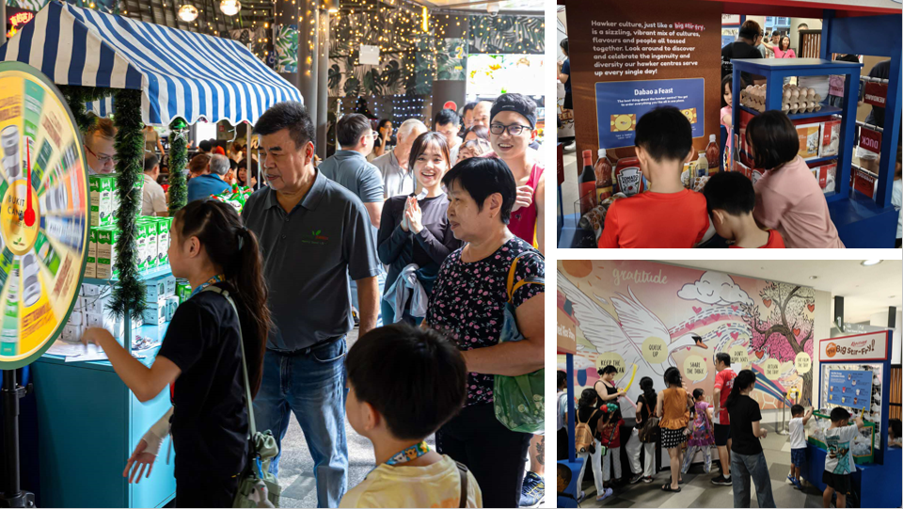
Operators use their operating surplus to organise events to engage their communities – clockwise from left: “Spin and Win” event at Bukit Canberra Hawker Centre; “Big Stir Fry” event at Hawker Centre @ Our Tampines Hub for participants to design their dream hawker spread and uncover surprising stories behind their favourite dishes.
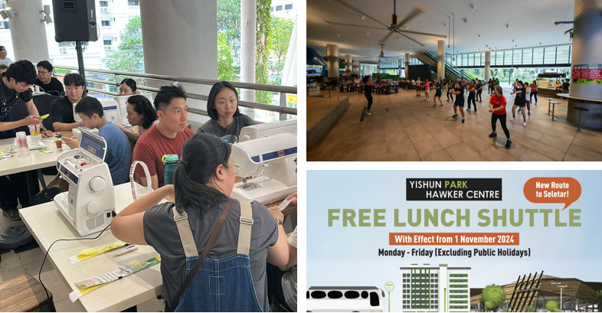
Clockwise from left: “Stitch Up!” workshop at Kampung Admiralty Hawker Centre for participants to transform discarded rice bags into practical household items such as cardholders; “Fitness! Stay Healthy” event at Punggol Coast Hawker Centre for participants to take part in a guided Zumba session; Free lunchtime shuttle service at Yishun Park Hawker Centre.
- Keeping food affordable for patrons
Affordability is central to the hawker centre mission, and SEHC operators are required to propose concrete ways to deliver this as part of their tender bids. Operators have done so by making at least one value meal available at each stall and stallholders are not expected to make a loss from selling these meals. Operators explain the value meal requirement clearly to stallholders upfront when tenancy agreements are signed, and work with stallholders to review and adjust value meal prices regularly based on their feedback.
Value meals are part of the range of food options offered at the SEHCs at a variety of price points, and account for around 5% to 20% of meals sold in SEHCs. Stallholders retain flexibility to offer other food items at prices that reflect their costs and effort. This balance gives patrons affordable options while enabling stallholders to earn a fair living.
- Listening to stallholders
Operators hold Hawker Feedback Group sessions at least once every quarter, attended by both operators and NEA representatives. These sessions give stallholders a regular, structured channel to share feedback and ideas, from improving the centre’s operations to better serving the community’s dining needs and ensuring stallholders’ livelihoods.
- Fair and transparent tenancy terms
Stallholders benefit from tenancy terms designed to give them flexibility and peace of mind. Notice periods are capped at no more than two months, and security deposits are limited to no more than two months' stall rental, giving stallholders flexibility to manage their tenancy arrangements.