From Trash to Treasure: Perspectives beyond the World of Waste
Follow Muhammad Khair Bin Sami’an’s journey into the waste management industry and uncover the passion that fuels him in his job.
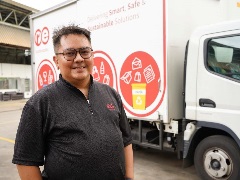
Muhammad Khair Bin Sami’an, one of the important team members behind the smooth operations of Re Sustainability.
Khair half-jogged into the interview room with beads of perspiration dotting his forehead and apologised for being late to the interview. “Our vehicle broke down and we have been trying to sort out the situation,” he explained.
Since joining RE Sustainability Solutions Ptd Ltd – an environmental waste mangement company – a year ago, 43-year-old Muhammad Khair Bin Sami’an has been tossed into the deep end. “Nothing is ever the same in this job every day, but that’s what makes it interesting!” he quipped. As a Senior Operations Executive, Khair’s role requires him to work with multiple moving parts. He plans the daily waste collection schedule, organises the manpower deployment, conducts site inspections and risk assessments at different bin centres, handles collection orders for the day and customers’ feedback.
Waste Not, Want Not
Hailing from a completely different industry of film, sound and video, Khair’s decision to join the waste management industry was fuelled by his love for the environment. After years of being in the rat race, Khair grew weary of climbing the corporate ladder. He yearned for a job that could create an impact on society while sustaining himself financially. “When I told my ex-colleagues and friends that I’ve found my calling in an environmental company dealing with waste resource management, many of them were surprised,” he said.
Even though the waste management industry is an essential service, many people are unaware that the work goes beyond emptying trash. Regrettably, Khair shared that people tend to think of waste collection as a dirty and smelly job. Well-meaning friends discouraged him from taking up the job and commented that he could be bringing home germs and bacteria to his family. Even after joining the company, some colleagues questioned how long he would stay in the job.
Despite the negative and discouraging comments, Khair remained undaunted. “I started meeting my senior colleagues one hour earlier every day, so that I can learn the ropes to do the job quicker. And this means arriving at work at 6 am!” he said. Determined to gain street credibility, Khair learned how to drive and operate a hook-lift truck within a few months through the Workforce Skills Qualifications course for waste drivers conducted by the Waste Management and Recycling Association of Singapore (WRMAS). He acquainted himself with the different types of waste and can troubleshoot vehicles and machinery whenever they break down. Less than a year into the job, Khair’s competence and enthusiasm earned him a promotion.
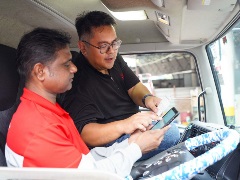
Khair going through compliance guidelines and audit checks with his staff.
Unknown to many, Khair’s job encompasses more than just manual duties. He actively works on innovation projects with his clients. For example, Khair is currently working with a client on a pilot cloud-based system where food waste collected can be weighed in real-time and the data uploaded onto a cloud platform. With the information, the company can provide a trend analysis and advise the client on daily output on the weight and profile of waste thrown. Since implementing this system, Khair's client has successfully tracked and reduced their food waste, making a significant contribution to their company's environmental initiatives. They are actively monitoring the amount of food waste generated to ensure it is not disposed of in the general waste bin for incineration. Through these collaborative efforts, Khair connects with clients to involve them in operational activities that support the company's goal of achieving Singapore's zero waste plan.
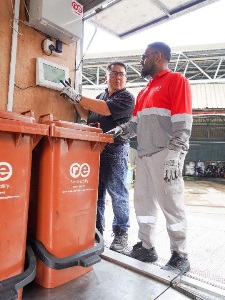
Khair training his staff on the correct use of equipment.
The Driving Force Behind a Clean Singapore
Besides technical skills, Khair spends a large part of his time mentoring and building a positive relationship with his drivers. “My drivers come in all shapes and forms,” he chuckled. “Sometimes they fail to turn up at work at the last minute, due to all types of reasons.” Not one to be frazzled, Khair has learned to make contingency plans. “If my driver is unable to come to work, I will first try out all the contingency plans, and if there’re no other options, I will be the driver for the day!”
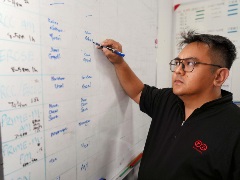
Meticulously planning the manpower and roster.
Over time, Khair’s hard work and sincerity resonated with his team, earning their trust and respect. “One of my drivers recently shared with me that he is more motivated at work now because he can see that we are working as a team.” In addition to planned preventive maintenance, Khair also takes it upon himself to conduct regular checks on the vehicles and equipment to ensure that they are in good working condition, so that staff can work safely and efficiently.
Since joining the company, Khair has found the experience to be humbling. Working with different colleagues has given him insights into the amount of work and effort required to keep Singapore clean. The job has also made him a better leader, taught him time management, and propelled him to think on his feet.
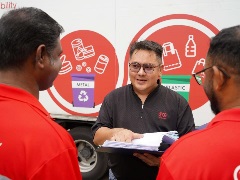
Khair conducts a ‘toolbox briefing’ every morning to remind his crew about operational and safety matters.
As an advocate for environmental sustainability, Khair feels that taking care of the environment should not only fall on the environmental services industry. “It is heartening to see that some of my clients’ persistence has paid off. The tonnage in their food waste recycling bins increased over time. I believe this is the result of the collective effort from all stakeholders,” he said. Other than corporations, Khair hopes that individuals can also do their bit for the environment by thinking about what they throw into their bins. “Are there things that we are casually throwing away and can these be recycled? Do we really need to order that much food? By making small adjustments to our lifestyles, we can all do our part for the environment, and for the future generations,” he added.
As for the future, Khair is confident that the waste management sector will continue to grow and evolve. He hopes that more innovators will join the industry to discover new methods for handling manual tasks. When such tasks are automated, workers can channel their efforts to critical functions, such as research and development, and advocacy.
“If you are looking for a career that is promising and meaningful, waste resource management is definitely something to consider,” Khair advised. “There are plenty of opportunities in technology innovation and automation in this industry, and it is more forward looking than you think!”