What Are Laser Pointers?
Laser pointers are handheld, battery-powered devices that project a focused beam of light, commonly used to highlight points on screens during presentations. Most emit red light, though green and blue variants exist.
Laser Classification System
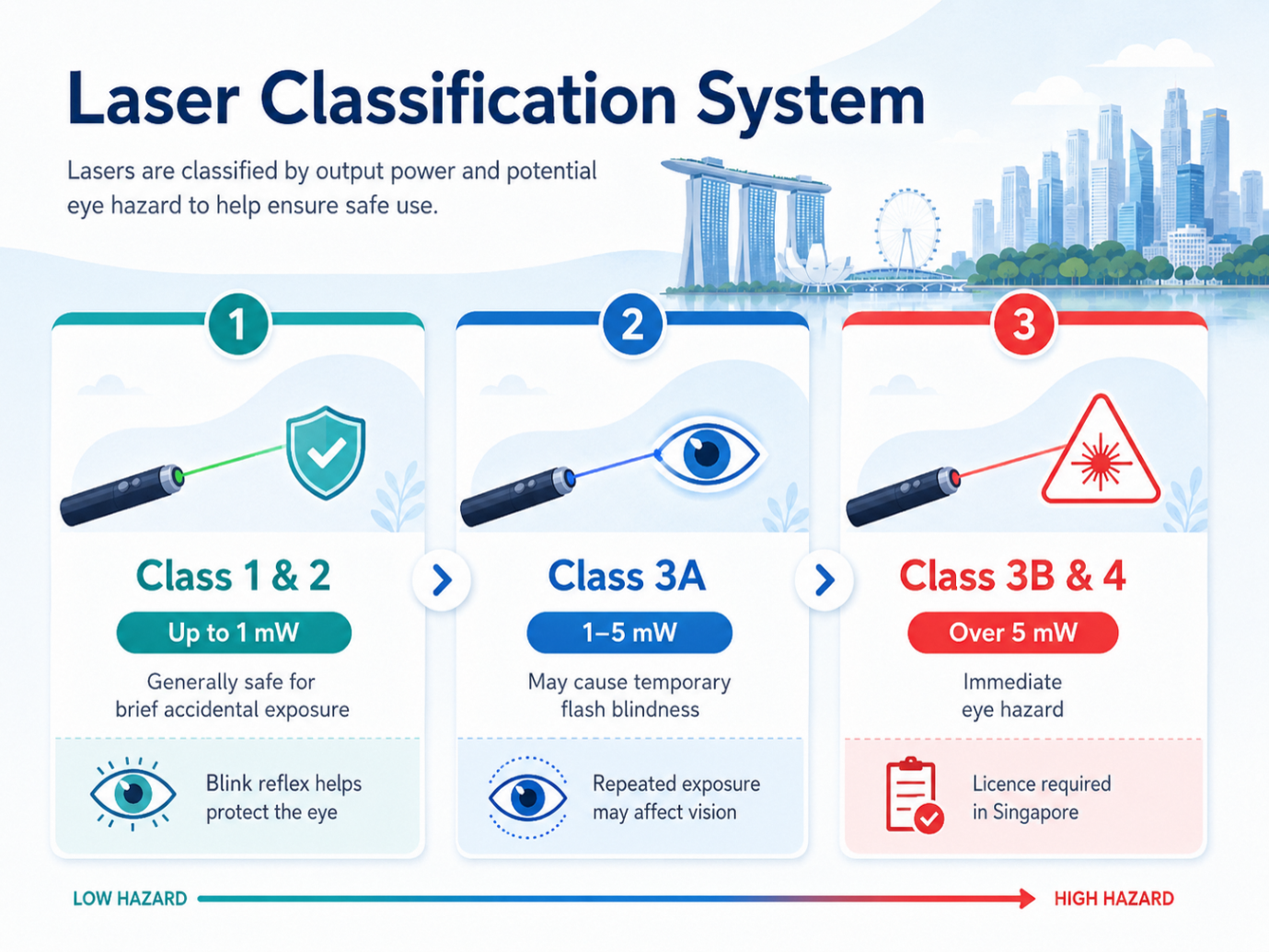
Lasers are classified by power output: the higher the class, the more powerful and potentially dangerous the device:
Class 1 & 2 Lasers (Up to 1mW)
- Generally safe for brief, accidental exposure
- Eye's natural blink reflex provides protection
Class 3A Lasers (1-5mW)
- Can cause temporary flash blindness
- Brief exposure unlikely to cause immediate permanent damage
- Cumulative exposure may lead to vision problems over time
- Still considered relatively safe for general use
Class 3B & 4 Lasers (Over 5mW)
- Extremely dangerous - can cause immediate, permanent eye damage
- May reach several hundred milliwatts
- Require licences to import, possess, and use in Singapore
Even at 5 mW, a laser aimed directly at the eye can cause temporary flash blindness. Repeated or prolonged exposure may lead to lasting vision damage over time
Under the Radiation Protection Act 2007 and its Regulations, administered by NEA: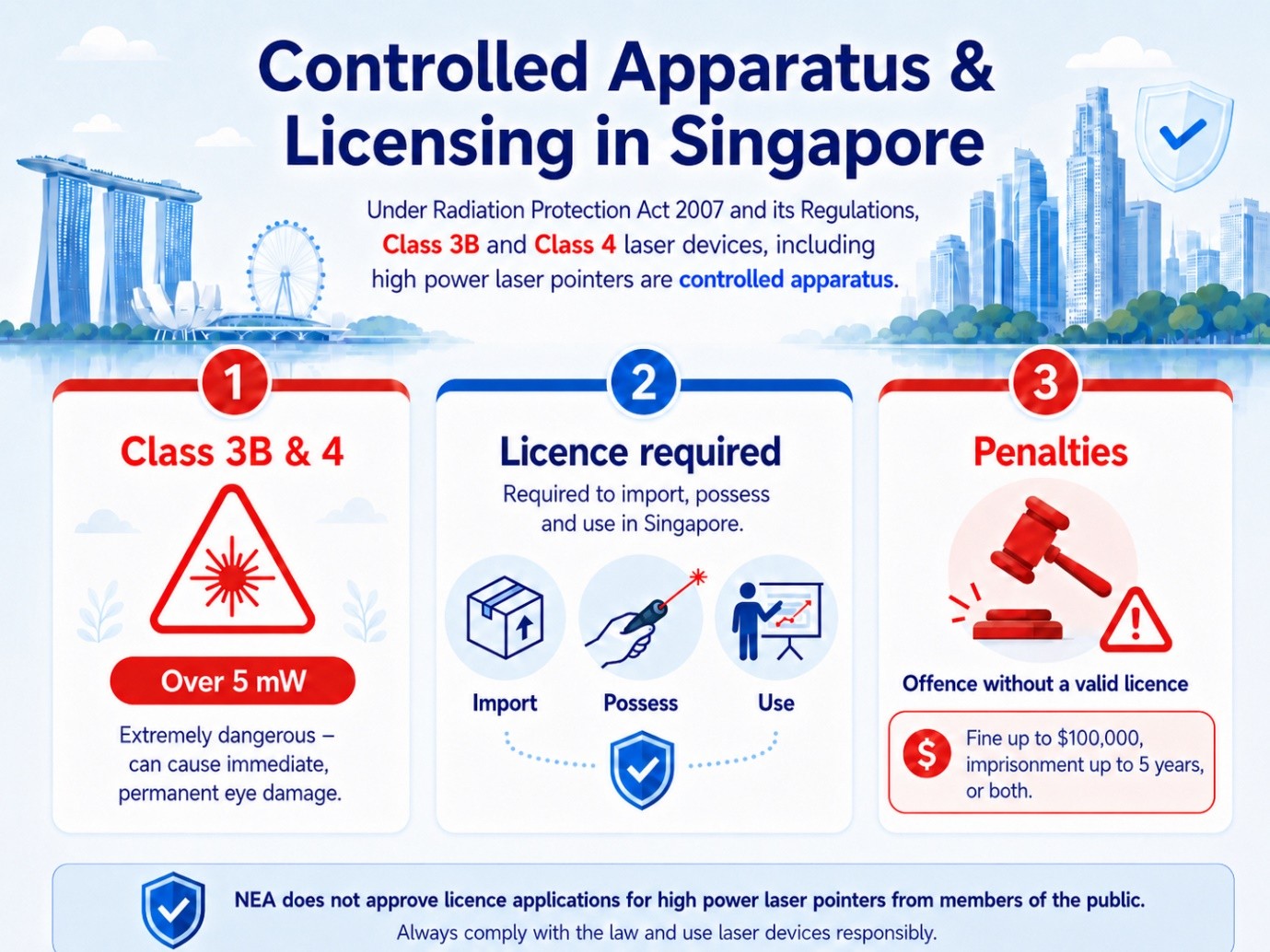
All Class 3B and Class 4 laser devices, including laser pointers, are classified as high power laser pointer and considered as controlled irradiating apparatus.
It is an offence to import, export, possess, use, manufacture, sell, or deal in high power laser pointers without a valid licence.
Penalties: A fine of up to $100,000, imprisonment of up to 5 years, or both.
NEA generally does not approve licence applications for high power laser pointers from members of the public.
Safety Information
For Educators and Trainers
- Supervise all laser use in educational settings
- Teach students about laser safety before allowing any interaction
- Consider laser-free alternatives for routine presentations
- Ensure classroom lighting is adequate during laser demonstrations
For Parents
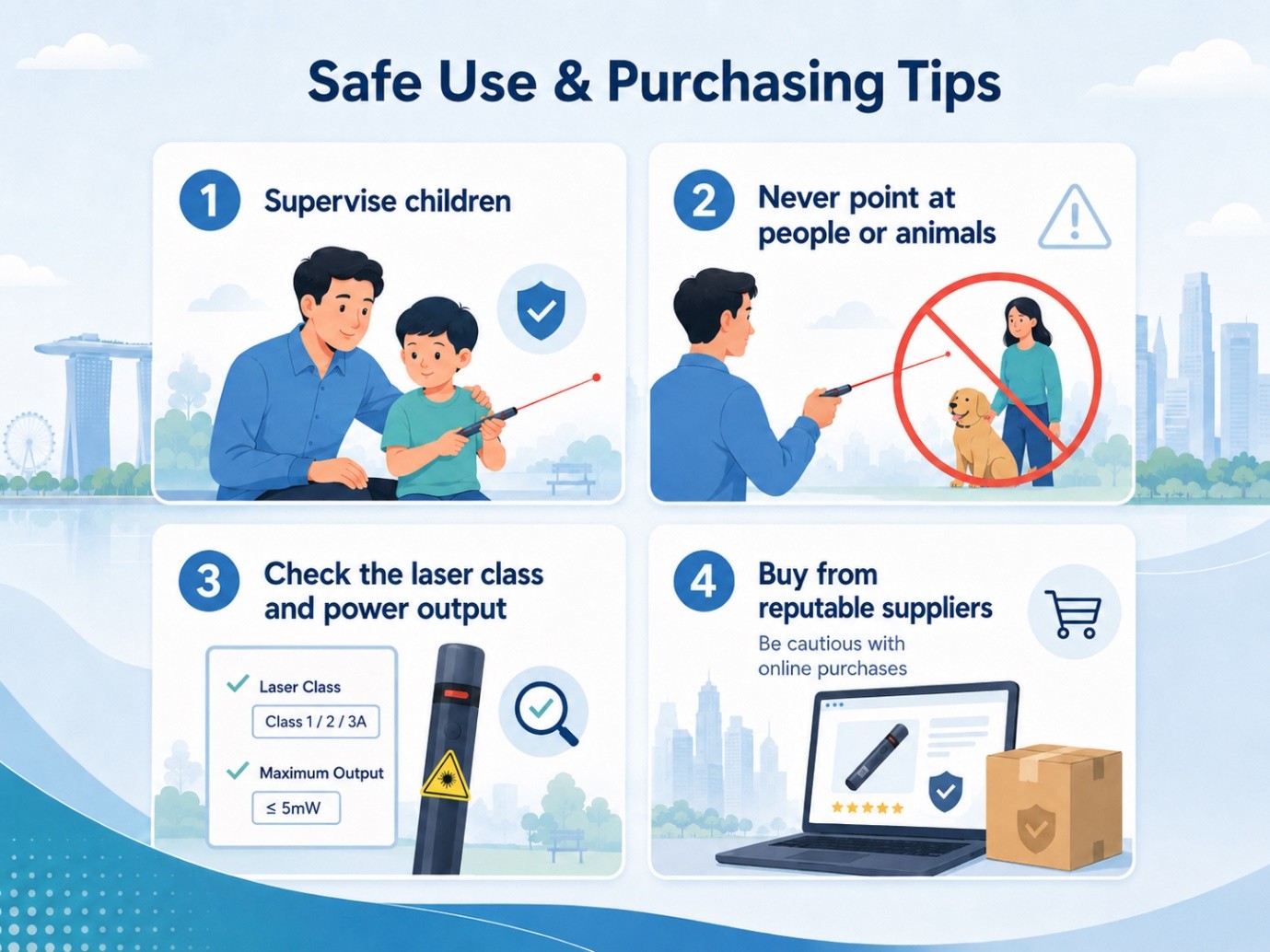
- Supervise children's access to laser pointers
- Explain the importance of never pointing lasers at people or animals
- Check power ratings before purchasing - stick to Class 1 or 2 devices
- Store laser pointers securely when not in use
Purchasing Considerations
- Buy from reputable suppliers who provide proper labelling
- Be cautious of online purchases, especially from overseas suppliers
- Remember that higher power doesn't necessarily mean better for presentations
- Verify the laser class and power output
Importing a laser pointer by post
If you import a laser pointer through postal services, you will receive a letter from NEA requesting your personal particulars and supporting documents confirming that the device does not exceed 5 mW. You must respond within 14 days of the letter, failing which the item will be returned to the sender.
Emergency Procedures
If Eye Exposure Occurs:
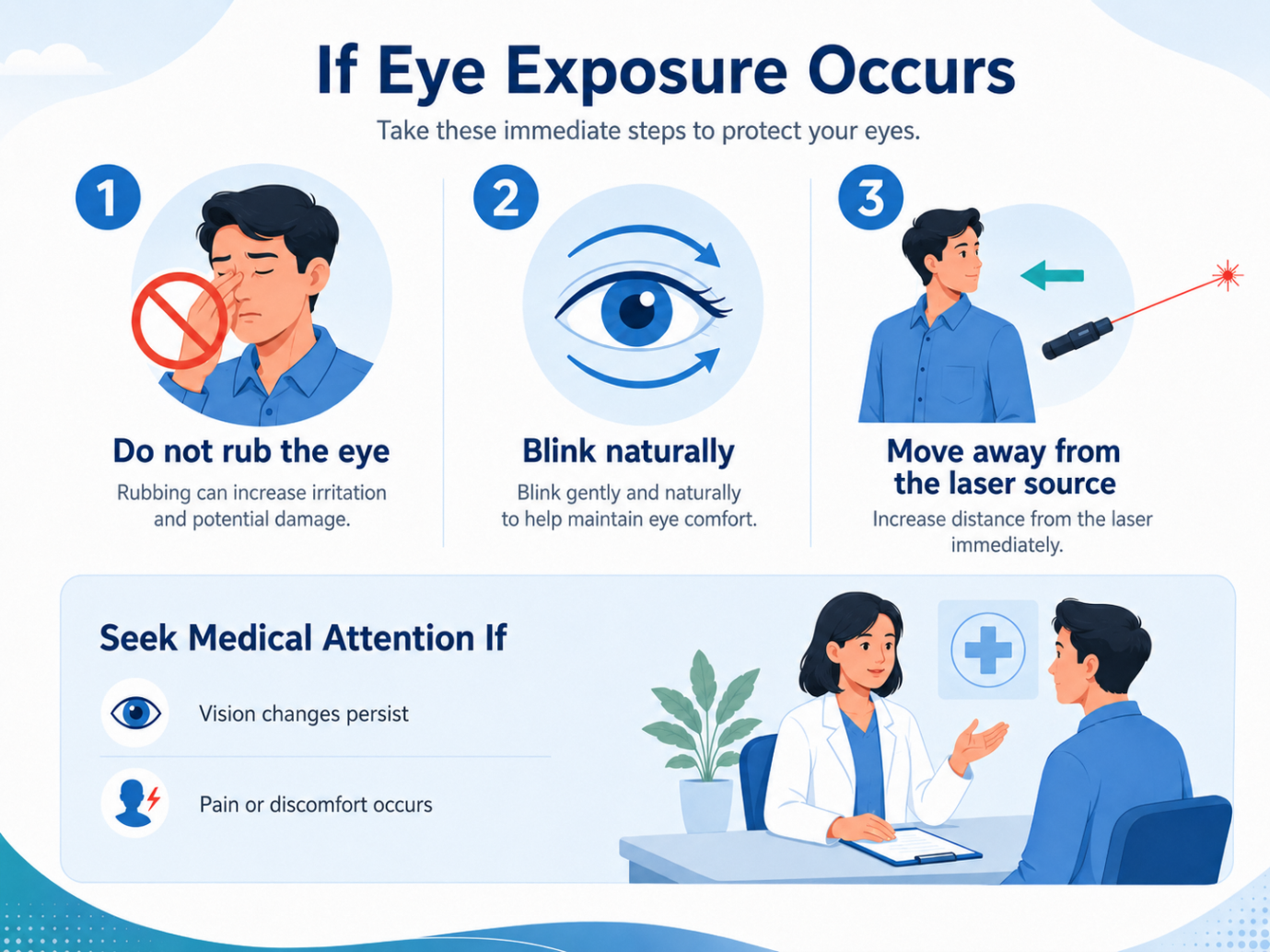
Immediate Steps:
1. Do not rub the affected eye
2. Blink naturally to help clear any temporary effects
3. Move away from the laser source immediately
Seek Medical Attention If:
• Vision changes persist beyond a few minutes
• You experience pain, discomfort, or unusual visual symptoms
• The exposure was from a high-power laser (Class 3B or 4)
• You're unsure about the laser's power level
Medical Consultation:
• Consult an eye doctor promptly for any concerning symptoms
• Provide details about the laser type, power level, and duration of exposure
• Mention if the exposure was direct or reflected
Reporting:
Notify NEA immediately of any laser-related injuries, especially those involving controlled irradiating apparatus.
Additional Resources
For more information about laser pointer,
or to report safety concerns, contact:
National
Environment Agency
Radiation
Protection & Nuclear Science Group
Non-Ionising
Radiation Control Department
Email: yap_qi_ming@nea.gov.sg
Resources