Introduction
To help contractors implement effective noise mitigation measures when carrying out noisy construction work, particularly for rejuvenation work within HDB estates and projects at landed properties where residents are in close proximity to worksites, a list of poor versus effective noise mitigation measures are described below.
Poor Noise Mitigation Measures
The following are examples of ineffective noise mitigation measures that do not sufficiently reduce noise disturbance:
Use of Nettings
Nettings are primarily designed to prevent falling of debris from falling and provide visual screening. They are made from synthetic materials that do not absorb sound. Without sound-absorbing properties, nettings are unable to reduce noise level generated.

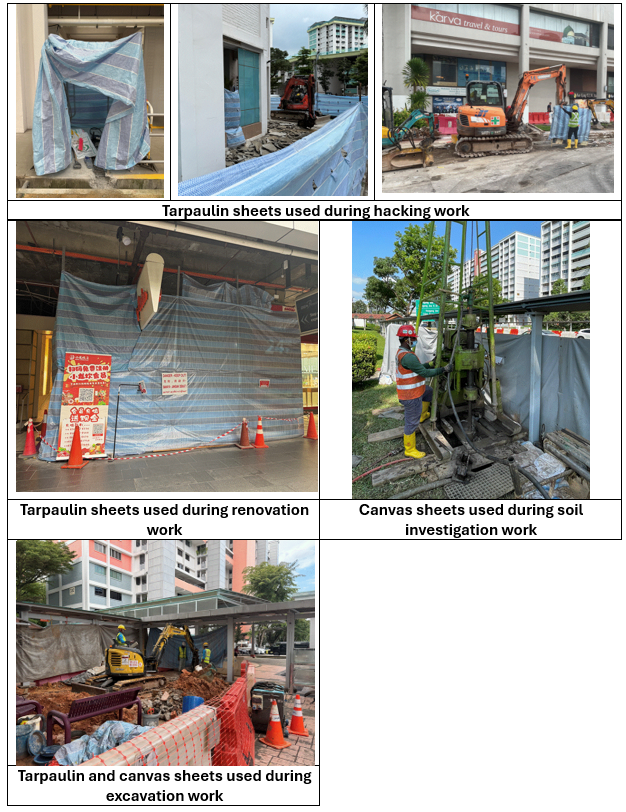
Use of Tarpaulin or Canvas Sheets
Tarpaulin and canvas sheets are commonly used for weather protection and dust control. While such sheets are made of non-porous material, they are too thin to effectively shield sound and does not have any absorptive properties. Instead, these sheets can cause sound to bounce and reverberate within a work area, and amplifying noise disturbance in certain directions. Tarpaulin and canvas sheets do not provide effective reduction in noise levels.
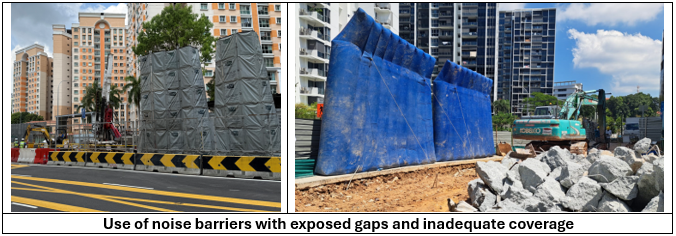
Insufficient Coverage
When implementing noise barriers, contractors must ensure that the barriers surround the work area as completely as practicable, without exposed gaps or inadequate coverage. Even high-quality barrier materials will be ineffective if they do not provide complete coverage of noise source. Effective coverage is essential to prevent sound leakage, which can significantly reduce overall noise attenuation performance of the barriers.
Good Noise Mitigation Measures
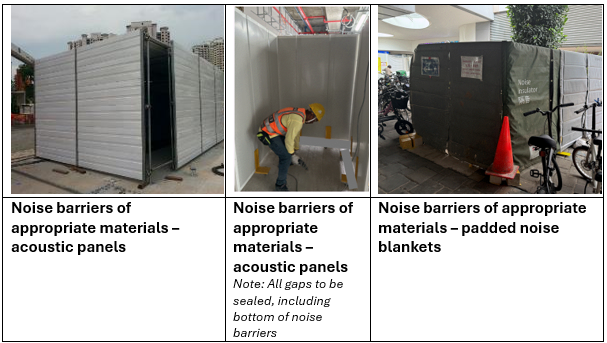
Effective noise mitigation requires sufficient mass/density or absorptive properties to reduce sound transmission. Contractors should implement the following effective noise mitigation measures to minimise noise disturbance:
Noise Barriers
- Install noise barriers made of appropriate materials (e.g. acoustic panels, padded noise blankets)
- Position noise barriers as close as possible to noise source
- Seal all gaps and joints to prevent sound leakage
- Extend noise barriers to fully enclose work area where practicable
- Ensure noise barriers are structurally stable and properly anchored
- Reposition noise barriers to be near noise source as work progresses
Improvements to Equipment and Work Practice
- Select quieter equipment where available (e.g. crushers instead of breaker, where practicable)
- Ensure silencers or mufflers are properly fitted onto noisy equipment such as excavators and generators to reduce exhaust and engine noise
- Place or orientate equipment and noisy work area away from noise-sensitive premises where possible
- Limit number of noisy equipment operating simultaneously
- Schedule noisier activities during less sensitive hours
- Maintain equipment regularly to ensure optimal performance and minimal noise
- Actively monitor noise levels by using predictive alert feature of real-time noise meters and look out for SMS alerts on risk of noise limit violations
- Implement additional noise mitigation measures as needed, taking into consideration noise sources and pathways
Communication and Engagement Measures
- Conduct pre-work engagement with affected residents to explain noise mitigation measures
- Establish clear communication channels for residents to raise feedback
Contractors may also refer to ‘SS 602:2025 – Code of Practice for Noise Control on Construction and Demolition Sites’ by the Building and Construction Standard Committee (Singapore Standards) for guidance.